
Inside an orgone accumulator
A wooden cabinet, a metal lining and an unusual idea. What was Reich trying to build?
From outside, an orgone accumulator can look like a small wooden cabinet. The interesting part is inside its walls.
Reich's designs combined layers of insulating material and metal. The familiar box version had a metal interior and enough space for a person to sit inside.
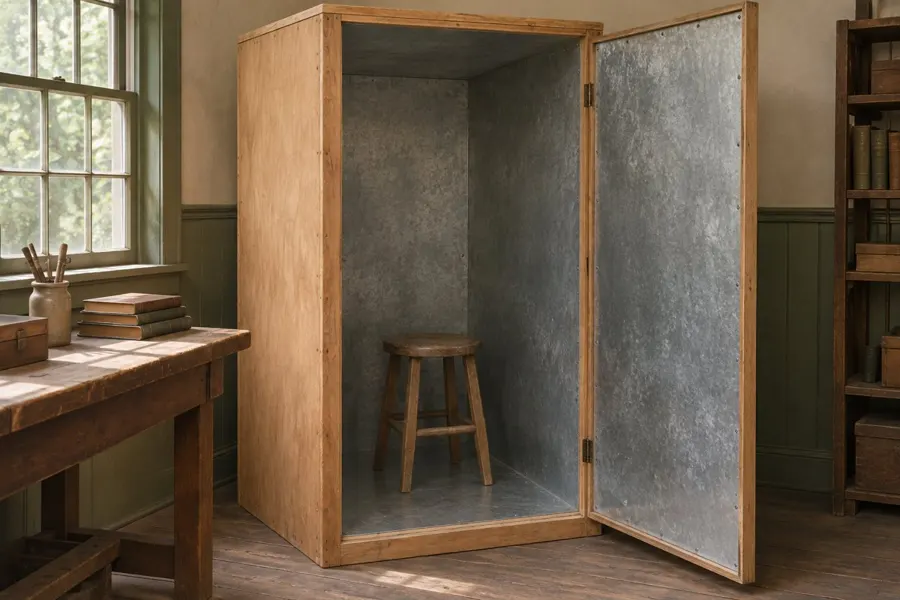
What were the layers for?
Reich believed different materials interacted differently with the energy he called orgone. He arranged them to collect and concentrate it within the enclosure.
That explains his intention. It does not show that the proposed energy was being collected.
A description of a machine and evidence that it works are two separate things. We can understand the construction without accepting every claim made for it.
A box with a bigger story
The accumulator is interesting as an object because it turns an abstract idea into something tangible. You can look at the layers, the lining and the space inside, then ask what a fair test would need to measure.
It also helps explain a common confusion. The cabinet Reich developed is very different from the small resin pyramids sold under the orgone name today.
Keep exploring
Orgone and orgonite: why the names cause confusion →
Sources & image notes
These sources document the history and claims discussed here. The Wilhelm Reich Museum preserves Reich’s legacy; the FDA account gives the regulator’s perspective. Images were generated for this website and are illustrations, not historical records or evidence of an effect.